
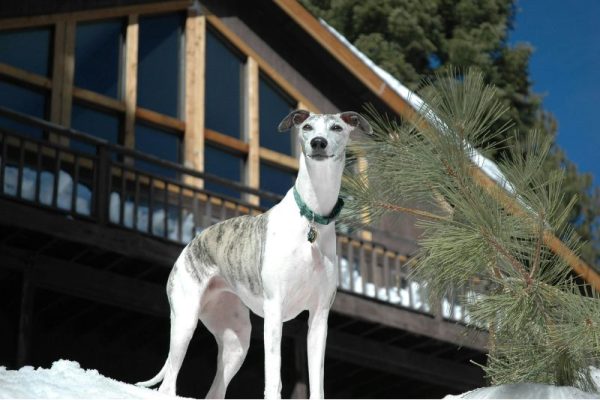
An Introduction to the Elegant Athlete
The Whippet is a beautiful contradiction. In one moment, it is an explosion of chaotic energy, sleek and aerodynamic, capable of breathtaking speed. In the next, it is a quiet and curled elegantly on the softest spot on the couch, or looking for gentle cuddles. This breed is both a world-class athlete and a relaxed “couch potato,” a combination that blows my mind!
However, this dual nature is not a quirky accident of breeding; it is the very essence of the Whippet, a core characteristic forged by its unique history. The Whippet’s profound ability to transition seamlessly from a high-energy sporting hound to a gentle, affectionate companion—is the key to its enduring appeal and makes it uniquely suited to the demands of modern life.
This guide offers some key facts of this remarkable breed. From its origins in the coal-mining communities of 19th-century England to the details of the official breed standard, we will delve into every facet of the Whippet. We will examine its distinctive physical traits, unpack its complex temperament, provide practical advice on care and health, and compare it to its sighthound cousins. For those considering welcoming a Whippet into their lives, and for those who already cherish one, this report serves as the definitive resource on the “poor man’s racehorse” that has raced its way into hearts around the world.
| Characteristic | Description |
| Dogs Australia Group | Hound |
| Average Height | 47-51 cm (male), 44-47 cm (female) |
| Average Weight | 11-18 kg |
| Life Span | 12-15 years |
| Temperament | Affectionate, quiet, gentle, calm, playful, even-tempered |
| Exercise Needs | Medium; daily walks with regular opportunities for sprinting in a secure area |
| Shedding Level | Low to moderate; minimal compared to many breeds |
| Tendency to Bark | Low; known to be a quiet breed |
How are Whippets different from Greyhounds
The Whippet belongs to the sleek and speedy sighthound family, and you can think of it as the perfect middle ground between its larger relative, the Greyhound, and its smaller cousin, the Italian Greyhound. While they all share that classic, streamlined look, they are very different dogs when it comes to size, personality, and what they need from you. The Whippet is often called the “Goldilocks” of the trio because, for many modern families, it’s ‘just right’. It’s sturdier than the dainty Italian Greyhound but more compact and easier to manage than the much larger Greyhound, making it an incredibly adaptable and popular choice for family life.
| Feature | Italian Greyhound | Whippet | Greyhound |
| Dogs Australia Group | Toy | Hound | Hound |
| Average Height | 33-38 cm | 46-56 cm | 69-76 cm |
| Average Weight | 3-6 kg | 11-18 kg | 27-32 kg |
| Top Speed | Approx. 40 km/h | Approx. 56 km/h | Approx. 72 km/h |
| Temperament Highlights | Affectionate, playful, can be timid or aloof, “cat-like” temperament | Gentle, quiet, affectionate, playful, adaptable, “braver than Italian Greyhounds” | Gentle giant, sweet, sensitive, can be aloof, calm indoors |
| Exercise Needs | 30-60 minutes daily; less intense than larger sighthounds | Daily walks plus regular opportunities for full-speed sprints in a secure area | Daily sprint sessions and multiple walks; needs more space to run |
| Ideal Home Environment | Well-suited for apartments or smaller homes (“condo dog”) | Adaptable to apartments or houses with secure yards (“house dog”) | Requires a home with a large, securely fenced yard (“ranch dog”) |
| Key Health Considerations | Prone to leg fractures due to fine bones; dental issues. | Generally healthy; sensitivity to anesthesia, potential for cardiac issues in old age. | Prone to bloat (GDV); sensitivity to anesthesia; bone cancer (osteosarcoma). |
From Puppy to Adult: A Maturation Timeline
A Whippet litter can range from one to ten puppies, with a typical average falling between six and seven puppies. The journey from a tiny newborn to a graceful adult involves distinct physical and mental stages. Owners often find that while their Whippet may look like an adult by their first birthday, their mind and behavior can remain puppy-like for much longer. Understanding this timeline helps in providing age-appropriate care, training, and exercise.

| Age Range | Physical Development | Mental/Behavioral Development | Key Owner Focus (Training/Socialization) |
| 0-3 Months | Rapid growth in size and weight. Eyes and ears open (2-4 weeks). Puppy teeth emerge. Begins walking. | Senses mature. Begins to interact with littermates. Critical socialization period (3-12 weeks) begins; mind is like a sponge. | Gentle handling. Exposure to various sights, sounds, and surfaces in a safe, positive way. Begin housebreaking and crate training. |
| 3-6 Months | Legs and body lengthen. Teething is in full swing as adult teeth replace puppy teeth. Growth rate is at its peak. | Becomes more curious and independent. May enter a “fear period” (8-12 weeks). Begins to test boundaries. | Continue intensive, positive socialization. Enroll in puppy training classes (after 16 weeks). Provide appropriate chew toys for teething. Reinforce basic commands. |
| 6-12 Months (Adolescence) | Growth in height slows and tapers off. Nears adult height. Begins to fill out with muscle. Sexual maturity occurs. | Becomes more independent, may exhibit “teenage” behavior like ignoring commands. Prey drive becomes more pronounced. Energy levels are high. | Maintain consistent training and boundaries. Provide ample exercise in safe, enclosed areas. Focus on recall and leash manners. Keep training sessions short and engaging. |
| 1-2 Years (Social Maturity) | Reaches full adult height and weight, though muscle tone and chest depth may continue to develop until age two. | Behavior begins to settle down. Emotional maturity is reached between 12-18 months. Retains a playful, puppy-like personality. | Continue with consistent training and exercise. Solidify the bond through activities like lure coursing or agility. Enjoy the transition to a mature, yet playful, companion. |
The Whippet Temperament: A Gentle Soul with a Turbo Switch
The whippet temperament is a harmonious blend of calm affection and explosive athleticism. Understanding this dual nature is the key to a successful and happy life with this breed.
The Velcro Couch Potato
Indoors, the Whippet is the epitome of a gentle and peaceful companion. They are renowned for their affectionate nature, often bonding very closely with their families and earning the nickname “Velcro dogs” for their tendency to stick close to their people. They are generally friendly and welcoming toward strangers, which, combined with their quiet nature, makes them poor watchdogs but excellent house pets.
One of the most common questions is, do whippets bark a lot? The answer is a resounding no. They are a notably quiet breed and rarely bark, a trait that makes them well-suited for apartment or city living, provided their exercise needs are met. While they are typically good with children and other dogs, their sensitive nature means they can be overwhelmed by very loud, chaotic households. They thrive on companionship and can be prone to separation anxiety if left alone for long periods.
The Sighthound Unleashed
The calm indoor demeanor belies the powerful athlete within. Whippets were bred to run, and they require daily exercise to maintain their physical and mental health. While they do not need hours of relentless activity, they must have regular opportunities for what they do best: short, explosive sprints. A securely fenced yard or field is essential for this. Because of their powerful prey drive, they should never be allowed to run off-leash in an unenclosed area, as they can cover a vast distance in seconds and will not easily find their way back.
Understanding the Whippet Prey Drive
The whippet prey drive is not a behavioral flaw; it is the core of the breed’s identity. As sighthounds, they were bred to hunt using their keen vision, and their instinct to chase small, fast-moving objects is deeply ingrained. This instinct is powerful and instantaneous. A squirrel, a rabbit, or even a plastic bag blowing across a field can trigger a high-speed pursuit before an owner has time to react.
It is critical for potential owners to understand that this drive cannot be “trained out” of a Whippet. It can only be managed. This means a lifelong commitment to on-leash walks in unfenced areas and providing safe, enclosed spaces for them to run. While some Whippets can live peacefully with cats, especially if raised with them from puppyhood, supervision is always recommended, as the instinct to chase can be triggered unexpectedly.
Whippet Breed Clubs in your State

| State | Name of Club | URL |
| Victoria | The Whippet Association of Victoria Inc. | whippetvic.com |
| New South Wales | The Whippet Club of NSW Inc. | whippetclubnsw.com |
| Queensland | The Whippet Club of Queensland | whippetclubqld.com |